Showing posts with label UK recession. Show all posts

Wednesday, 23 March 2011

So, how was it for you? Reactions from local businesses to George Osborne's latest Budget.

So how was it for you?

Angela Ward, Manager, PR Services with The Marketing Eye, interviewed a number of local businesses and professional advisers to gauge their reaction to this afternoon's Budget.

Today’s Budget was, businesses in the South East, generally agreed ‘good and well intended’.

Neil Edwards, managing director of The Marketing Eye said: “George Osborne said a lot of the things that small businesses want to hear - making Britain the best place to start up, finance and grow a small business has to be the right aim. However, service businesses in the South East never seem to get a mention – and we need a helping hand too. We are looking for more incentives and tax breaks to employ people in the South East.”

It wasn’t, however, a Budget with many surprises.

“As the Chancellor was speaking, I was struck by how much we already knew - due, no doubt, to the fact that either economists and accountants are getting better in second-guessing what’s coming or perhaps the government is getting better at leaking proposals before they are made public,” commented Martin Pollins, managing director, Bizezia. “Overall, it looks like a sensible Budget that responds fairly to the concerns of many citizens in the UK.”

There were a few ‘headline grabbers’, such as the proposed merger of income tax and National Insurance.

“However, this will have political implications about raising tax rates and will need to be carefully considered to make sure it doesn’t hit the ‘wrong’ people,” added Keith Hall, director, Feist Hedgethorne.

Nick Green, branch manager of Handelsbanken in Tunbridge Wells, described it as ‘a Budget that appeared to be aimed at stimulating growth and empowering entrepreneurial Britain’. He said that this could be seen in a number of measures, particularly the cut in Corporation Tax, no new regulation for small firms for the next three years and new rules to help planners prioritise jobs and growth.

Martin Pollins pointed out that cutting the Corporation Tax rate by 2% will mean that the tax rate will be the lowest in the G7 and Richard Holme, a partner at Creaseys, agreed that the cut in Corporation Tax is good news.

“This will hopefully encourage investment,” he added. “The rate for smaller companies will fall, as planned, to 20% from next month. More individuals and businesses should now look to channel activities through limited companies to save large amounts of tax, especially if extractions of profit can be deferred.”

Another key highlight was that investments under the Enterprise Investment Scheme (EIS) will attract tax relief of 30% (from 20%) form April 6, something described as a ‘step in the right direction to getting people to invest in small and growing businesses’ by Richard Holme.

Kieron Robertson, estate planner and independent financial adviser, Valiant Financial Consultants, added: “Increase in entrepreneurs’ relief will also be well received from those in business – a doubling of the lifetime limit of gains from £5 million to £10 million.”

It was also announced that there will be an increase in research and development tax relief to 200% (and 225% next year), which was described by Keith Hall as ‘an opportunity that smaller companies in the digital community should not overlook’.

Neil Edwards said that there wasn’t much in the Budget to take the risk out of employing staff and to get people back to work and spending again.

He added: “We want to grow the business, take on new staff and reward the ones we’ve got. Finding the cash for pay rises is difficult in the current climate and it’s made harder if anything you do offer is negated by inflation and increased NI. I am, however, pleased that increase in the personal allowance will offset the rise in NI for individuals and that steps are being taken to limit the rise in fuel prices. This means any pay rises we can offer will make people better off each month.”

There was some relief for first time buyers, which Nick Green said was ‘good’ and Kieron Robertson agreed. He explained: “The £250 million commitment to first time buyers provides some solace to those struggling to raise deposits – although it is a shame it is restricted to those buying new homes. Will this mean that more school fields are sold off?”

The one thing which everyone – including said Nick Green ‘the beleaguered motorist and haulage firms’ - was united in welcoming was the measures to freeze the planned inflation rise in fuel duty and reduce it by 1p.

The announcement of a 10% Inheritance Tax discount for those leaving 10% of more of their estate to charity was welcomed.

“The charity sector is suffering at the moment – so anything that can be done to give it a boost is good news,” said Richard Holme. “It is also positive for people who wish to leave part of their estate to charity. Donors will need to look carefully at their wills and also plan whether to give to charity in lifetime through gift aid, or on death to save Inheritance Tax.”

Kieron Robertson concluded that it was ‘always going to be a hard Budget – with so much anguish caused over the last few years (if not longer?) and the borrowing to fund the deficit forecast of £146 billion.”

Neil Edwards added that ‘there is still a lot of uncertainty out there’. He explained: “Rising inflation rates and threats of increases in interest rates don’t help. In the absence of confidence, we need our costs held down and the ability to leave as much profit in the business as we can to re-invest - not paying it all out in tax.”


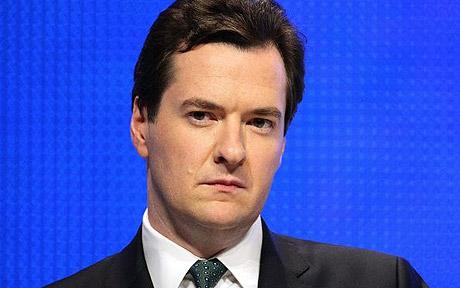
What did you think of the Budget? Share your thoughts and we'll share them across our network.

Wednesday, 16 March 2011

Local entrepreneurs speak out on Budget wishes

With the Budget just around the corner (Wednesday 23 March), we canvassed some of our clients – a mixture of business owners and professionals – for their Budget wishes.

Understandably in this climate, our clients have a number of concerns – covering not only business issues, but also worries about the NHS, for instance, and our ageing population.

Martin Pollins, managing director of Bizezia in Haywards Heath says: “We need tax relief on private medical insurance premiums, which will help the overburdened NHS.”

Richard Bamford, key account director with Citrus Healthcare Consulting in Hildenborough agrees that the government needs to introduce measures to reduce the financial pressures placed on the NHS.

“Individuals who take out private medical insurance should be encouraged and rewarded for taking responsibility for their health and wellbeing, therefore reducing the cost burden placed on the NHS,” he says. “The constant advancements in medical treatment come at a price, with more money needing to be pumped into the NHS for it to cope with these costs. People should be given a tax break to help pay for their private medical insurance, especially pensioners. If the government wants the NHS to be sustainable in the future, bold decisions need to be made.”

If people are lucky enough to remain fit and well and outside of medical system as they head towards retirement – old age itself brings with it more than enough to worry about. Michele Pearson, wealth adviser with iMAP Your Finances in Cuckfield, would like to see a simplification of the pension laws.

“People want to know what they can expect at retirement, regardless of their savings,” she says. “If you want people to invest now to make their future in retirement better, then you need to give them certainly for them to build on.”

Martin adds: “Abandon the minor allowances for the elderly, such as winter–fuel payments, and combine them into an increased basic pension – it will save money on administration costs and put the level of UK pensions closer to those in other countries. Also for the retired population, I would like to see better interest rates on savings, or no tax on savings, lower taxes or no taxes on state and other privately-funded annuities.”

When it comes to saving, Michele says that personal investors want better returns from their savings. She adds: “The government can help by providing more tax-free havens – we haven’t seen a TESSA account for years – and why not extend the ISA limits further?”

Kieron Robertson, an estate planner and independent financial adviser with Valiant Financial Consultants in Tunbridge Wells, says that it would be good to see more done to encourage people to save both in the short-term and beyond.

“It would be good to see a reduction in Capital Gains Tax for those with assets held over periods of say, more than five years and more to encourage savings towards retirement,” he explains.

Richard Holme, a partner with Creaseys in Tunbridge Wells, wants George Osborne to ‘leave Capital Gains Tax alone or perhaps look to reduce the main 28% rate slightly. He adds: “Above all, retain the 10% rate for sales of businesses (entrepreneur relief) in order to encourage entrepreneurs to invest to assist in the continuing recovery of the UK economy.”

We – and our clients - are united in wanting to see more done to stimulate business investment and offer companies support.

“George Osborne must fulfil his promise to centre the Budget on entrepreneurialism and business growth,” says Neil Edwards from The Marketing Eye. “Getting people back to work and safeguarding the liquidity of small businesses is the priority. Offering rewards and incentives to businesses to employ people by offering relief from employers’ NI or rebates on previous years’ corporation tax will take the risk out of new hires for small businesses and get consumers spending again.”

Chris Winning from The Winning Partnership in Tunbridge Wells says that there need to be tax incentives for Research & Development.

“We need to ‘kick start’ the economy again and, more importantly, help businesses to recover from years of depression,” he says. “They need assistance with R&D to give them a chance to be innovative, create new income streams and boost the bottom line profit.”

He’d also like the 50% tax rate to be abolished, as he feels it is discouraging entrepreneurship.

“Much wasted time was spent preparing for this incredible leap upwards,” says Chris. “For the costs involved and fees paid to advisors, I would have thought more cost effective methods of collecting taxes from a larger proportion of the population would have been better employed.”

Adds Nick Green, branch manager from Handelsbanken in Tunbridge Wells: “There are many ways that businesses can be supported, such as reducing red tape, incentivising local government to speed up the planning process, simplifying the corporate tax regime and looking to reduce the 50p income tax rate to encourage entrepreneurship and spending.”

Finally, a major worry to everyone is the price of fuel.

“The price of fuel is reaching crisis proportions and is rapidly becoming an inhibitor to business growth. Steps need to be taken to bring fuel prices down or at least cap them at where they are,” says Neil Edwards.

Adds Nick Green: “Individuals’ spending power is being eroded through inflationary pressures, due to increasing food, commodity and oil prices. With the rising price of oil, the government is already benefiting from additional ‘tax take’ and while the additional fuel duty levy was built into their calculations for reducing the UK debt burden, the impact on individuals and business is becoming increasingly apparent and, therefore, I would like to see this potential further imminent rise in fuel duty deferred or scrapped.”

Finally, Richard Holme is hoping for a quiet Budget.

“Please no tinkering with the tax system unless absolutely necessary – we already have over 12,000 pages of tax law,” he says. “It would be good to have a Budget one year which makes no tax changes at all!”

Looking ahead, at The Marketing Eye, we are remaining upbeat. Neil says: “We are countering uncertainties around growth, inflation and interest rates by maintaining our marketing to build our brand and keep in touch with the evolving needs of our clients. Businesses that have the courage to continue marketing will survive and prosper when growth returns to the economy in the latter part of the year.”


What are your pre-Budget wishes? Do you agree with our commentators? Let us know.

Tuesday, 18 January 2011

For business' sake - interest rates must stay low

With inflation at 3.7%, why is everybody starting to advocate increasing interest rates?

The inflation in the economy is cost-push, not demand-pull. Simply put, prices are going up because the cost of goods is going up - not because demand is running away with itself on the back of borrowed money. The important subtlety is that it is import costs - principally fuel and food - that are going up, not domestic ones.

The theory is that as you increase interest rates, speculators are encouraged to buy sterling and its value goes up. The relative cost of imports therefore goes down.

But hang on a minute. The £ will only rise sustainably on the back of underlying economic strength. If that underlying strength doesn't exist, the £ will remain under pressure and we will be caught up in a perilous spiral of rising interest rates in a vain attempt to shore it up.

Economic strength comes from a strong balance of payments and a healthy business sector that is creating employment and driving domestic demand.

The consequences of a rise in interest rates now would be catastrophic for the recovery: our resurgent export industry would be dealt a debilitating blow and people with mortgages would be forced to cut back. Businesses too would be saddled with an increased cost - slowing employment and forcing some to the brink.

To load a rise in interest rates on top of an increase in VAT, the rise in fuel duty and the impending increase in employees' NI, all in the same quarter, would be a particularly vindictive form of masochism.

Interest rates will have to go up at some point - we all accept that - but only when we have an excess of demand, which is not now.

Please folks, see sense. A bit of inflation in the economy today, when the causes are readily identified and the adjustment rationally explained, is a worthwhile price to pay when the alternatives are contemplated.

Saturday, 1 January 2011

'Be prepared' - is the main advice for 2011 from The Marketing Eye


The Stock market has a Santa ride to a year-end high, interest rates remain low, inflation is above target, but not a major cause for concern, and manufacturing and exports are picking up.

So, what is there to worry about?

Well potentially, quite a lot. Expect an early adjustment to the stock market as soon as trading re-commences next week, interest rates will rise before the year is out and fuel will be more than 130p per litre by the time most of you read this. Hopefully, we won't have to add a series of strikes or, worse still, another General Election, to the obstacles we have to overcome during the year.

But this doesn't mean gloom and despondency.

Far from it. One of the first laws of good marketing practice is to understand your environment and if we go into the year suitably prepared for what is to come, we will have nothing to fear. As an old riding instructor once said: "There is no such thing as bad weather, just bad kit".

2010 was a significant one for The Marketing Eye. We doubled our headcount, launched a PR business and consolidated our reputation in event management. While it looks as though we will miss our stretching turnover target by a small margin, we will still achieve 50% growth - no mean achievement in a culture where, historically, the first reaction to any sign of difficulty has been to cut the marketing budget.

We are very grateful to new clients and old for the trust they have placed in us and consider ourselves fortunate to have clients that see marketing and The Marketing Eye as part of the solution, not part of the problem.

To look back on earlier posts is always amusing and, fortunately, I seem to have avoided any grave embarrassment with my predictions for 2010.

Marketing budgets were indeed hard won and major projects were either cancelled or heavily diluted. The focus on ROI was sharp - as it always should be.

Businesses in the UK made good progress with social media. Twitter moved on from 'toe-in-the-water' dabbling to an accepted way of engaging with a community that continues to grow exponentially. The non-believers, however, remain abundant. The art is to be discerning with who you follow and to build your profile with a relevant audience. Note the use of the word 'relevant' here.

Facebook fan pages have come a long way, with personalised Facebook URL's now being common place in promotional material. The Marketing Eye is using Facebook for short news items - a rolling commentary on what is happening in the business - and finding a good fit for it within our overall communications strategy.

The marketing soothsayers are out in force with their predictions for 2011. Picking our way through them, our 'Big 5' tips are:

  • Wake up to the reality of the 2012 Olympics. There will be more sport related references in marketing and sport sponsorship will become fashionable and effective. Lawyers will no doubt be busy advising on and defending against breaches of Olympic copyright.

  • Make sure your website is fully accessible on mobile browsers. There will be an explosion in mobile marketing and if your website is not accessible on a smartphone, make sure it is by the end of the year. Mobile is another reason to join in with Twitter and Facebook as these are easily and regularly accessed via smartphone apps.

  • Rein back on content generation. People are not reading reams of content online: instead, it is bite sized bulletins that can be consumed in downtime on smartphones that are needed. Be discerning in what you produce and who you send it to. - and don't forget to use PR to gain coverage in printed publications, radio and TV.

  • Don't get too excited by geo-location networks. 4Square and its compatriots are touted as the 'next big thing', but have all the signs of being a fad. There will surely be a backlash against revealing personal locations as people realise they are only of benefit to advertisers.

  • View marketing automation with healthy suspicion. Marketing automation gained ground as a buzzword in 2010, particularly in the US. Marketers must, of course, make use of all the technology at their disposal to increase the frequency and relevance of their communications. We sense, however, the same whiff of panacea as was promised by CRM systems in the 1990's. Any system is only as good as the information that is put into it and the people that access it. Marketing silver bullets will remain works of fiction. There will never be any substitute for an integrated and sustained programme of activity across a variety of media.
As well as paying heed to the foregoing, our 'be prepared' kit for 2011 will include even greater focus on client service to ensure we retain and reward the clients that we have; a new emphasis on making a contribution to the community in which we work, financial prudence to make sure we remain masters of our own destiny and a relentless commitment to building brand awareness in our core target markets.

On which note, may we wish you all a happy, successful and marketing led 2011.


Monday, 29 November 2010

Osborne navigates the South East economy across thin ice

Chancellor George Osborne was optimistic in his update to MPs on the health of the UK economy during his autumn statement today, but life is likely to remain unpredictable for businesses for some time to come.

George Osborne is only offering the lightest hand to businesses as he gingerly navigates the economy across thin ice. He is gambling that net export income and new investment will percolate its way through the system before domestic demand drops due to the cuts in public spending and the impending increases in VAT and employees’ National Insurance.

While his statistics might look encouraging at a macro level, I wonder if he truly appreciates how finely balanced it is on the front line.

The uncertainty, even among those of us that are doing relatively well, makes it very difficult for any business owner to commit to significant new investment or employment. Most businesses don’t have the option of suddenly opening up markets in China and India if demand falls at home.

The availability of finance will remain another significant inhibitor to growth. Osborne shouldn't believe the bank's spin when they say they are supporting small businesses. I have it on good authority that despite what the leaders and PR people might be saying, the people who work in the dark offices behind the scenes are scared rigid of making a mistake: credit is extremely tight as a result. If we need finance to grow in 2011, we will need to look elsewhere for the investment we need.

One of the best things George Osborne could do in the next Budget is to make it even easier and more attractive for private individuals to invest in small businesses. If the banks won’t do it, somebody else has to fill the gap.

While he is at it, Mr Osborne should also look at increasing incentives to employ people by extending the National Insurance concession for new businesses that was announced in the last Budget to the whole of the UK (the South East, London and the East where notably excluded). He should also stop limiting the allowance to start-ups, as it is the established businesses that will offer the most secure employment opportunities - particularly for young people.

Finally, it is time to update the concession on VAT for marketing materials. At the present time, printed promotional materials are zero rated for VAT. This needs bringing into the 21st century by extending it to websites, email marketing and pay-per-click advertising.
Any disincentive to businesses marketing themselves effectively needs to be urgently removed.

Wednesday, 7 July 2010

Woolies to expand

In an update to our post of February 2009 about the re-launch of Woolworths, it was interesting to read in Retail Week this week that Woolworths.co.uk has 'delivered on target' after one year of trading.

Now its owner, Shop Direct, plans to expand the ladybird brand to include toys, nursery and toiletry ranges. It is also considering selling through shop franchises or under licence.

Toys and a nursery range make perfect sense for the ladybird brand, but toiletries? Surely this is a brand stretch too far.

We correctly predicted in 2009 that the future for Woolworths was on-line and yet the owners seemingly can't resist a return to the High Street. The difference this time is that they're not doing it at their risk, but at the risk of franchisees. This should be a clue.

Potential franchise holders must take a serious look at why Woolworths failed on the High Street and have a strategy for avoiding the same pitfalls before parting with their cash. (They can read our post of December 2008 if they need a reminder).

Friday, 1 January 2010

2009: A year in review - and our predictions for 2010

2009 was a challenging year for marketers. This time last year we were talking about the collapse of Woolworth's and still recovering from the shock of Lehman Bros; the banking crisis was in full swing and we were surrounded by fear and uncertainty.

Fortunately, we seem to have been spared the worst fears of the naysayers. Whether this is because of, or despite, government intervention divides opinion and we will all get our chance to record our point of view in 2010.

In a tough and uncertain climate, marketers were called on to perform in a way that we haven't been for some time. The pressure for short-term, measurable results financed with slender budgets overpowered any sense of long-term planning and brand building. We rushed head-long into social media, not I suspect, because we knew how it would work, but because it was trendy and cheap.

In the office, we had to improve relationships with sales and finance to ensure stakeholder buy-in and a seamless progression from concept through to delivery: it is bizarre to think it might ever have been any other way.

Unfortunately, little progress has been made with improving marketers' sense of self worth. The hand wringing continues, with many marketers bemoaning their lack of influence at senior levels within their organisations, yet seemingly unable to devise a strategy to put it right.

On a more positive note, the summer months saw The Marketing Eye engaged in the debate about marketing automation. Led by the US, this still has some way to go in the UK, but it is encouraging to see people trying to harness technology to support sound marketing principles.

Our involvement came about via this blog, which has proved popular in many countries and has a particularly strong following in the US. The appetite for new content in the US appears insatiable. Our post on the differences between B2B and B2C marketing still attracts more than 100 readers a month and a plethora of comments.

The year saw fewer than normal corporate re-brands, but the controversy they created was no less heated. AOL, Kraft and MSN where amongst those that offered us evolved identities. Starbucks sent bloggers into a spin with their experiment with un-branded coffee shops in Seattle.

The big story of 2009 was, however, the explosion of Twitter, which came of age with the revolution in Iran. Twitter is still growing and is now finding its natural level. We have still to see the first Twitter-born brand, but the growth in the personal brands of people like Stephen Fry and Ashton Kutcher suggests the potential is there. Compare the Market is the best example we have seen in the UK so far of Twitter being incorporated into a broader marketing strategy, building the personality of the brand via the incomparable meerkat, Aleksandr Orlov.

As a business, The Marketing Eye has come of age too. We have new people, new offices, and a recently appointed Chairman designate who will help steer the business towards its full potential. We are firmly set on a road to growth and the final few weeks of 2009 were spent immersed in strategy and operating models. Our goal is to grow the business four-fold by 2012, which we will achieve by hiring the best marketing people and staying true to our philosophy of 'every client is our only client'.

So what will 2010 hold for us? As a business, we will take on more staff, enter new markets and strengthen our internal processes so that we can continue to put customers first. For the world of marketing, our crystal ball reveals the following:
  • Twitter will continue to grow globally: its value for search and news will be realised. Marketers will still struggle to harness it for commercial purposes - but will keep on trying

  • The shift towards spending on digital marketing vs. off-line will increase, probably because it is cheaper, not because it is proven to be better

  • There will be some renewed growth in branding. Businesses that have neglected their brands over the past couple of years will now be finding that a revamp of the external and internal brand is overdue. At a visual level, an updated identity will signal renewed optimism as we claw our way out of recession. The business case will still have to be made and investment will be hard won

  • Marketing budgets will nudge gently upwards as we come out of recession or as businesses start to adjust to, and accept, the 'new normal'

  • A change in Government seems inevitable. As a marketer, I'm interested to see how the parties make use of new and old media to win our votes. As a businessman, I want to know which is the party for business.

What were your main marketing memories of 2009 and what do you predict for 2010? We'll be interested to hear your views. Whatever your role and wherever you are, may we take this opportunity to wish you a happy and healthy 2010.

Happy New Year!

Saturday, 3 October 2009

Cut to grow - a plea to politicians on behalf of small businesses

With the growth of our business being at the top of my agenda, I find myself paying closer attention than ever to the political situation.

Like England's one-day batsmen, Brown and Darling look to be on their way back to the pavilion. Never at their best in public, last week's party conference did little to boost their ratings and confidence.

This is a shame, because in the single most important issue of recent times - the global financial crisis - Brown has proved himself to be the safest pair of hands. The support for the banks and the expansion in public spending has been instrumental in containing the depths of the recession - a model that has been copied across the world. When the dust has settled, this will go down in history as Brown's legacy. As the BBC's Nick Robinson observed: 'Now it seems the electorate will treat him as they treated Churchill in 1945: "Thanks for the help, but now it's time for you to go"'.

These are finally balanced times. Where we see signs of recovery - rising house prices and increasing confidence in the UK; the end of technical recession in France, Germany and Japan - we see signs of a double dip recession elsewhere. Higher than expected unemployment figures from the US pushed the FTSE100 back below the psychological 5,000 level on Friday.

Finally balanced indeed.

Forgive the bias, but one of the principal policies for economic recovery must be a strategy for the growth of small businesses. Small businesses like ours with an ability and ambition to grow have the potential to create jobs and wealth, which in turn will create wages, spending and tax income.

As an advocate of the spending that is happening now, I accept that it has to be met with increases in tax revenues in future. My anxiety is that Brown's strategy is geared to raising revenue with tax increases rather than economic growth. We already have the prospect of £10 billion worth of tax rises next year - amongst them increases that will hit small businesses very hard: fuel duty, VAT rising again, higher business rates and the pending increase in employers' National Insurance contributions. These make me, and I'm sure every other business owner, very nervous indeed. This is not a healthy situation.

Despite my admiration for Brown as a financial manager, there is a worrying lack of logic in many of these rises.

Employers' National Insurance is an explicit tax on jobs. We should be encouraging businesses to employ people, not taxing them more for doing so.

Higher business rates will hurt cash flow and lead to more empty shops and offices. Empty shops and offices depress the nation. Furthermore, as many commercial premises are owned by pension funds, the value of people's pensions and their feelings of security will be hurt, leading to cut backs in spending.

The pointless cut in VAT at the last pre-budget report remains lost on me. The changes required to implement the change are significant and impose a costly and unnecessary distraction on small business owners.

But it is a tax that is not currently flagged for increase that causes me the greatest anxiety. Corporation Tax is the biggest inhibitor to business growth. Like many businesses, we have an impending tax bill based on last year's profits and have had to create a reserve to meet it - a reserve that could be used to fuel the expansion of the business. A cut in Corporation Tax would lead to significant increases in employment and investment in the short term and propel growth and a higher tax take in the long term.

Through the conference season, I haven't heard any party come out with solid policies for small businesses. The party that eventually does will get my vote this time.

What do you think? Let me have your views.

Saturday, 9 May 2009

Reasons to be Cheerful - Part 1

'Tis a brave man indeed that calls the bottom of the market.

Surfing through the week's headlines we have seen:


Add to this that base rate has been held at 0.5% for a second month, the FTSE100 is up 21% since the start of the year and RBS has managed to only lose £897m in the last 3 months (bonuses all round), it would be a glass-half-empty reaction indeed not to feel the smallest glimmer of hope.

Of course, it's not all good news:


A lot of this so called 'good news' is based on slowing rates of decline rather than a return to growth, but could we at least say that we are bumping along a rather stony bottom?

Like many of the small businesses that we meet, we are not experiencing a catastrophic downturn. The decision making process remains protracted, but the enormous fear that has prevailed since last October is subsiding.

'Tis a brave man indeed that calls the bottom of the market.

Let's do business.

Friday, 27 February 2009

Judgment time

One of the great things about blogging is that you can read back over your own posts and remind yourself how you were feeling at any point in time.

Looking back over last week's posts I can see that I was in a rather tetchy mood (my wife confirms this to be the case). Condoning cuts in the marketing budget and dismissing tweaks to marketing messages as a finger in the dam are the sort of statements that will get me drummed out of my professional institute.

Thinking about what I was doing last week, I recall spending time with a luxury hotel, a retailer of safari holidays and a London estate agent, all businesses that are at the sharp end of the new normal. I guess I was feeling their pain. These businesses don't need tired cliches or fiddling while Rome burns, they need practical advice and hands on support to help them quickly generate more sales.

16 years of constant growth in the UK has provided marketers with the breathing space and investment to try new ideas and promulgate new principles (never a bad thing). The new normal will be the judge of which of these ideas really contribute to bottom line profit. To see which marketing myths are dispelled and how often the emperor is stripped of his new clothes will be fascinating.

Tuesday, 24 February 2009

Not a recession, it's the new normal

According to Sir John Gieve, the outgoing Deputy Governor of the Bank of England, Britain is at risk of being in recession for the next 10 years.

That being the case, it's about time we adjusted our language and stopped thinking about it as a recession and more as 'the new normal'. If we look back on the last 10 years as exceptional (and let's be fair, not universally enjoyable - the whole process of keeping up with the Jones's and comparing house prices was pretty draining after a while) then we might have more chance of getting on with life.

In the 'new normal' things will not be worse, just different.

The way our customers think will be different, they way they act will be different and they will care about different things. They might even be different people.

Armed with this new mind-set we can set about acquiring the knowledge and insight we need to market effectively.

Here are 9 thoughts for the new normal (it was going to be 10, but one was cut in honour of the new climate). We must:
  1. Make sure that our relationships with customers, suppliers and staff are in excellent shape

  2. Identify changing needs and wants and adapt our propositions accordingly

  3. Stay true to the quality of our brands. Price promotions might hold up volumes in the short term, but will reduce profits and brand value over time

  4. Continue to invest in new products and services. Try new things. Cutting back on investment, innovation, product quality and customer service will result in a loss of market share that will be impossible to recapture

  5. Reduce our key objectives to a 'vital few' and focus all of our marketing energy on these

  6. Review our marketing budgets, invest where we need to and make sure we are running tight ships

  7. Take advantage of falling media prices to steal a march on the competition

  8. Recognise what we are very good at and build on it

  9. Be noticed and stand out from the crowd.

The bottom line is we musn't panic and throw our business strategies out of the window. Customers won't go into hiding. The desire for holidays, new houses, financial services, sales training or whatever it is we offer will still exist, we will just have to work harder to convert that desire into a purchase. Put another way, we will need to give people more and better reasons to make the commitment.

and here is another interesting post, almost a parable

Thursday, 19 February 2009

Irrational marketing for rational customers won't work

Seth Godin is a well respected blogger and talks good sense on a variety of marketing related issues. In his post on The rational marketer (and the irrational customer), however, he misses an important point.

Seth expresses frustration at marketers who can't work out why more people won't buy their products or services and suggests the answer is to stop focusing on rational benefits and instead to tune-in to irrational drivers, for example, the hassle of making the change or concern about what the boss will think.

We have clients who find it hard to accept that people aren’t buying their products or services in sufficient quantities too. The first step, is not in messaging or sales techniques, but to establish if there is still an adequate market for the product or service in the first place.

We are in a recession, which means that demand for all but the most essential purchases falls. The response to falling sales is to identify and understand the market. This might mean exploring new markets or establishing a proper basis of aggressive competition in existing ones: normally by differentiation or focusing on a niche. If necessary, costs and processes have to be reviewed to maintain profitability while price competition takes place.

The decision making process might meander through irrational steps, but the ultimate decision to sign a cheque in these straitened times is still a very rational one. Businesses have to accept that their market might be shrinking and adapt accordingly. To try and stave off falling demand by simply tweaking the message is equivilant to putting a finger in a broken dam.

Monday, 16 February 2009

It’s OK to cut the budget

The adage that the businesses which maintain their marketing expenditure during a down-turn will be the ones that prosper in the end is backed by evidence.

As a statement, however, it was coined at a time when the marketing options were fewer than they are today. Short term adjustments to expenditure are not damaging and may indeed be exactly the right thing to do.

The extent to which a business is reliant on tactical marketing to drive sales volumes will influence the amount that needs to be spent during a down-turn. A business that relies on internet sales, for example, may have to increase its expenditure to generate a greater number of visits to the website and compensate for a drop in the conversion rate. To cut the marketing budget now would be to accept an immediate reduction in sales.

For many other businesses, a switch out of cash-hungry promotional activity and into a greater focus on looking after existing customers and using on-line and off-line networking and PR to attract new ones, could be a good idea and may even lead to a re-appraisal of the type of activity the company does over the longer term.

Marketing, through its own failings, will of course always be associated with promotional activity. The full marketing mix is much broader than this and a reduction in promotional activity could be more than compensated for by taking the time to identify a new product, a new niche or an improvement in the customer experience.

The mantra ‘don’t cut the marketing budget’ needs to be re-written as ‘don’t cut the marketing activity’: it’s not what you spend, but how you spend it that matters.

Monday, 19 January 2009

We'll get through this together

We are launching our new advertising campaign today. Based on a theme of ‘We’ll get through this together’, the campaign recognises that many of our clients are currently focused on survival and security.

Survival and security doesn’t mean cancelling all marketing – on the contrary – it means marketing wisely and in areas that will deliver results. There are several things that we are talking to clients about at the moment that don’t involve them spending more money.

Knowing and staying in touch with customers is probably the most important one and is at the forefront of many plans. We describe this as ‘reviving that first date feeling’: looking for excuses to get in touch and be together.

Watching competitors also yields results. Competitors are eating our client’s lunch and we need to know what they are doing. Asking customers if they are being approached and to see what they are being offered can be very informative.

Whatever field our clients are in, we look for the one thing that will make them stand out from the crowd. Without differentiation, there is only price to compete with, which can often be a downward spiral. The starting point for differentiation is to understand what our clients are very good at - what the signature dish is. With this established we can focus the marketing effort on the core strength.

Finally, we advise concentrating on one thing at a time. In reality, and particularly now, it is better to take small steps towards a goal than embark on a huge project that will absorb a lot of resource and take a long time to deliver. Results breed confidence and confidence is what is needed right now.

Tuesday, 23 December 2008

That was the wonder of Woolworths

The administrator’s announcement of the closure of all 807 Woolworths’ stores shows that no value could be realised from the business as a going concern. The question remains whether there is any value in the brand and if anybody will be willing to pay a price for it.

In our brand value blog last month we argued the worth of the Ryanair brand and made the case for significant value by using the metrics of awareness; understanding; preference and stretch: this despite the airlines apparent unpopularity with many.

When applied to Woolworths we get a very different result and some important pointers.

Awareness
Woolworths is a highly visible brand. Brand awareness is invariably a positive attribute as it drives business through the comfort of familiarity and apathy in the search process. Somebody should be able to put this awareness to positive use.

Understanding
Understanding is where the Woolworths’ brand starts to unravel. People lost sight of what Woolworths was and stood for. The shops were confused, a hotchpotch of crammed aisles offering everything from pick-n-mix sweets to garden furniture. The unifying element was price and when cost leadership is your sole basis of competition, there is only one direction for those prices to go - down. A major re-positioning exercise would be required by any acquirer.

Preference
There was a time when Woolworths was a natural choice for many, offering as it did an Aladdin’s cave of goods, conveniently located at fair prices.

In its dying days there was nothing the stores offered that couldn’t be acquired in a more satisfying way elsewhere. There was no positive reason to choose Woolworths other than it was there. Any benefit of convenience was rapidly eroded by the shift to out-of-town locations and the Internet.

Stretch
To stretch the brand into new markets would require getting the preceding factors right, something that proved beyond the ability of the previous management. A new management team, however able, would surely ask itself, why it should invest in a broken brand for a new market when it can focus its resources on building something new.

So, any value beyond the awareness seems to have been destroyed. What lessons are available from this demise?

Woolworths started as one of the original penny bazaars when such things were seen as a marvel of commerce. But times change and Woolworths didn’t. As we warned our children away from the excesses of sugar and the music industry switched to downloads, Woolworths stubbornly kept its front of house offer as sweets and CD’s. If the strategy was for high-spending parents to be dragged in by low-spending children, it clearly didn’t work.

The brand lacked any clarity in its basis of competition. There are essentially three choices: focus, differentiation and cost leadership. Woolworths had no focus, try as it did to offer all things to all people. There was no point of difference and cost leadership is only sustainable by the market leader – and there can’t be a leader in an undefined market.

The greatest tragedy of all was that Woolworths stopped caring for itself. In the final years, the stores were a mess and the staff totally disengaged. Woolworths went from having a great brand to no brand at all in less than 10 years because it lost sight of what it had and failed to evolve a new space for itself in a changing market. A brand is defined by passion and loyalty and seemingly the staff noticed the problems before the management. If there is no passion and loyalty in your staff then you can hardly expect it of your customers.

A brand that falls out of love with itself is no longer a brand at all.

Tuesday, 25 November 2008

Cut VAT? Will somebody please explain

So, the great white hope is a cut in the rate of VAT.

Forgive me, but aren't prices set according to supply and demand (or has the free market gone for ever too)? Every shop in the High Street is already cutting prices by 20%, 50% or more in an attempt to stimulate demand, so what difference is another 2.5% going to make?

And even if we do all feel a little warmer at the thought of paying less VAT, are we really going to spend the money or are we going to save it?

From a business perspective, I just don't see where the benefit is. We collect and reclaim VAT, so it's going to be the same exercise with a different number. Instead we'll have to make changes to our accounting software to accommodate the change, get confused by what rate to charge over the intervening period and then go through it all again in reverse in 12 months time.

The big opportunity was to defer the collection of corporation tax. We, like many businesses, have a March year end, which means we've got a corporation tax bill to pay in a few weeks time. Deferring the collection of these monies for 6 months or longer would put much needed liquidity immediately back into a large number of small businesses and reduce their reliance on the banks - who can't be counted on to help them out in any event.

We are fortunate that our liquidity is OK, but none of us knows how long or how deep the recession is going to be and when we will be tested.

All of the measures announced today will take a long time to trickle down into the pockets of businesses and their customers. In the absence of cash, the hope has to be that the budget will instill confidence, whether it's real or perceived, because that is what is missing at the moment. If consumers and businesses are confident they will buy more and the economy will start moving forward again.

Tuesday, 28 October 2008

How will you survive or thrive in the recession?

The latest blog comes from another member of The Marketing Eye team, Sharon Wilding.

It seems that everyone, including the Prime Minister, now agrees that the UK is in recession, so we can stop saying ‘what if’. The question now is how much it will affect you and your business.

There’s no denying that some people will have a really tough time, but remember it is not inevitable that you should be one of them. This was the message that came out strongly from a telephone seminar I attended this week.

Chris Cardell describes himself as ‘a world leader in advanced thinking’ and the seminar was entitled ‘Seven Essential Strategies to Survive and Thrive During a Recession’. Chris offers marketing advice and guidance using a style with a strong American influence. This can get a bit grating, but basically he seems to make his money by talking a lot of common sense about marketing.

His number one message for surviving a recession was ‘Beware the scarcity mindset’. This means that you should not get carried away by all the talk of doom and gloom, because belief changes actions. If you think negatively, you become similarly negative in your approach. This is not merely advocating a ‘Pollyanna’ view, suggesting that positive thinking alone will make things work out right, but realising that 80% of people/businesses are NOT going to lose their jobs or fail. There are still markets out there made up of people who need things and who can be persuaded to spend their money with you.

You may not be surprised to hear that in his remaining 6 points his advice was, in various ways, to ‘become great at marketing’: not by spending large amounts on media necessarily, but by having a great strategy for attracting people who are interested in what you have to offer., A useful statistic quoted by Cardell was that it takes 7 contacts to turn interest into a sale. This means making sure you use all available means to generate those interactions: build a database, communicate regularly online and via email, and give information freely.

And finally, you must ‘wow them’ with how you deliver, making sure everything you do, you do to the best of your ability. And that you are delighting your customers in the process. That is the way to survive and thrive in the recession.

So, now is not the time to hold back. Work out what being ‘great at marketing’ means for your business!

Friday, 24 October 2008

Interesting

We have a number of clients that trade internationally and we are, of course, all interested in what is likely to happen in the UK. We helped our clients, Creaseys, organise an event with Barclays this week and the speaker from Barclays Capital got out his crystal ball for us. To compare the predictions with the forecasts of National Australia Bank, which we reported in our doom and bloom post a couple of weeks ago, is interesting.

Barclays Capital is forecasting a 0.5% cut in interest rates by the end of the year and a low of 3% in 2009. The year end prediction is 3.50%.

Barclays' record with forecasts is pretty good, but before we all rush down to William Hill with the pension fund, it's worth noting that Lloyds TSB is forecasting 4.50%, HSBC 3.50% and others, such as JP Morgan and Deutsche Bank, are saying 2.5% by the end of 2009. Make of that what you will.

A $:£ exchange rate of 1.77 in 6 months time and 1.79 in 12 months appeared from the mist of the Barclays' crystal ball, as did a euro exchange rate of 1.27 and 1.30 respectively. NAB were more pessimistic about sterling against the dollar and forecast 1.66-1.60 in 6 months time (but, that was two weeks ago!).

Don't rely on anything and don't be dragged down by what you read and hear is our attitude. We are currently involved in some very exciting projects, we're regularly talking to new clients and Jo is in Dubai at the moment exploring opportunities for us down there. You don't know if you don't ask and you don't find anything if you don't look.

Tuesday, 7 October 2008

Doom and Bloom


Yesterday, we were at an economic briefing given by Tom Vosa, Head of Market Economics UK at National Australia Bank. His commentary was both enlightening and thought provoking.

Just in case anybody is in any doubt, those of us in the UK, Europe and the US are heading for a full-on technical recession. According to Tom, the underlying growth of the Chinese, Russian and Indian economies means that the global economy is still in reasonably good shape, but there is little dispute that we must become accustomed to a trading environment that many of us will not have experienced in business before.

Next year is likely to be rough. Tom forecasts negative growth in the first two quarters before the first signs of recovery in the second half of the year. Year on year growth of 0.6%; a 4% fall in consumer spending; a $/£ exchange rate of 1.60; a 30% fall in house prices and oil bottoming at $80 a barrel are all on the menu for us to digest.

Real consumer spending power has already fallen by 1% due to the increase in fuel and energy prices and is set to fall by a further 3% next year in direct correlation with the fall in house prices. The retail, leisure and tourism industries will undoubtedly be worse hit by us feeling that we have less disposable income.

For those of us living and running businesses in the South East there are some glimmers of hope. Good levels of equity exist in house prices and the labour market is strong. The wave of job losses is expected to be largely absorbed by the migrant worker population and businesses on the whole are in a good cash position. We can also rely on government spending, particularly on infrastructure, to underpin the economy.

Tom described now as 'the end of the beginning' of the credit crunch and expects the MPC to bring the base rate steadily down to 4% by February next year. The frustration for most of us is that, while interest rates on deposits will be reduced immediately, borrowing costs are likely to remain unchanged as the banks seek to increase their lending margins to recover their losses.

So what exactly can we do about it? After all, we are individually powerless to influence the actions of the banks and not many of us have the option of switching our business to the Middle & Far Eastern markets.

There is a lot of debate at the moment about whether consumers will return en-mass to the large and trusted brands. After all, brands like Northern Rock and XL set out to kick sand in the face of the dominant players, but it is ultimately the established brands that have endured.

Our view is that it will be the businesses with reliable brand promises that will survive and ultimately benefit, regardless of their size. In times of uncertainty, consumers seek the reassurance of brands they can trust and a small business has more opportunity to present its trust credentials than a large business. The failure of Lehman's and XL graphically illustrates that we have no idea what is going on behind the scenes in large corporations.

Trust can be a more powerful motivator than price, even in a recession. Zoom and XL have proved a painful sojourn for those seeking a bargain.

Trust is gained by acting and delivering with integrity. Businesses that focus their marketing efforts on demonstrating transparency and giving outstanding customer service will win trust and maximise new and repeat business. Get closer to your best customers; make sure you have terms of business in place, have the courage to say 'no' to customers that abuse your trust in them and maintain your marketing effort to maximise brand recognition and affinity and you will be doing all you can. Nothing is guaranteed, but this seems to us the best way to bloom in the gloom.

Thursday, 11 September 2008

We'll put some fun into the numbers

We'll start this adventure into blogging with some good news and a little bit of trumpet blowing by us at The Marketing Eye.

Tunbridge Wells chartered accountants, Creaseys - one of the top 100 firms in the UK - have appointed us to provide strategic marketing support on an ongoing basis.

The move is another step in Creaseys' strategy to position itself as the leading accountancy practice for businesses and high net-worth individuals in the South East. We are naturally delighted to be appointed and look forward to getting stuck into the task.

One of the things we are going to do is introduce Creaseys to the delights of blogging and other social media to make people more aware of the astonishing depth of resources that exist at the practice. Several of the partners have publications to their name - ideal material for blogs and Squidoo.


The greater focus on marketing at a successful business like Creaseys underlines how every business needs to think about how it is going to compete in the long term and have a proper marketing strategy and plan.

We are pleased to say that we are seeing a rise in the number of enquiries here at The Marketing Eye despite the slow-down in the economy - indeed, we have now decided we need to recruit. The attitude this time seems to be one of not waiting to be hit by a recession, but to improve efficiency and go out and compete for every piece of business that is going - thank goodness for that.
