Wednesday, 23 March 2011

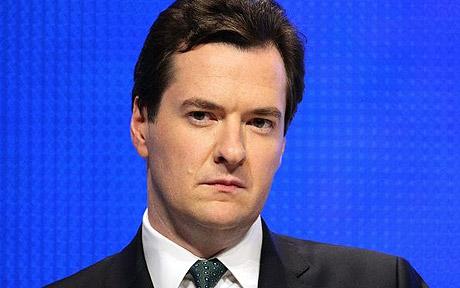
So, how was it for you? Reactions from local businesses to George Osborne's latest Budget.

So how was it for you?

Angela Ward, Manager, PR Services with The Marketing Eye, interviewed a number of local businesses and professional advisers to gauge their reaction to this afternoon's Budget.

Today’s Budget was, businesses in the South East, generally agreed ‘good and well intended’.

Neil Edwards, managing director of The Marketing Eye said: “George Osborne said a lot of the things that small businesses want to hear - making Britain the best place to start up, finance and grow a small business has to be the right aim. However, service businesses in the South East never seem to get a mention – and we need a helping hand too. We are looking for more incentives and tax breaks to employ people in the South East.”

It wasn’t, however, a Budget with many surprises.

“As the Chancellor was speaking, I was struck by how much we already knew - due, no doubt, to the fact that either economists and accountants are getting better in second-guessing what’s coming or perhaps the government is getting better at leaking proposals before they are made public,” commented Martin Pollins, managing director, Bizezia. “Overall, it looks like a sensible Budget that responds fairly to the concerns of many citizens in the UK.”

There were a few ‘headline grabbers’, such as the proposed merger of income tax and National Insurance.

“However, this will have political implications about raising tax rates and will need to be carefully considered to make sure it doesn’t hit the ‘wrong’ people,” added Keith Hall, director, Feist Hedgethorne.

Nick Green, branch manager of Handelsbanken in Tunbridge Wells, described it as ‘a Budget that appeared to be aimed at stimulating growth and empowering entrepreneurial Britain’. He said that this could be seen in a number of measures, particularly the cut in Corporation Tax, no new regulation for small firms for the next three years and new rules to help planners prioritise jobs and growth.

Martin Pollins pointed out that cutting the Corporation Tax rate by 2% will mean that the tax rate will be the lowest in the G7 and Richard Holme, a partner at Creaseys, agreed that the cut in Corporation Tax is good news.

“This will hopefully encourage investment,” he added. “The rate for smaller companies will fall, as planned, to 20% from next month. More individuals and businesses should now look to channel activities through limited companies to save large amounts of tax, especially if extractions of profit can be deferred.”

Another key highlight was that investments under the Enterprise Investment Scheme (EIS) will attract tax relief of 30% (from 20%) form April 6, something described as a ‘step in the right direction to getting people to invest in small and growing businesses’ by Richard Holme.

Kieron Robertson, estate planner and independent financial adviser, Valiant Financial Consultants, added: “Increase in entrepreneurs’ relief will also be well received from those in business – a doubling of the lifetime limit of gains from £5 million to £10 million.”

It was also announced that there will be an increase in research and development tax relief to 200% (and 225% next year), which was described by Keith Hall as ‘an opportunity that smaller companies in the digital community should not overlook’.

Neil Edwards said that there wasn’t much in the Budget to take the risk out of employing staff and to get people back to work and spending again.

He added: “We want to grow the business, take on new staff and reward the ones we’ve got. Finding the cash for pay rises is difficult in the current climate and it’s made harder if anything you do offer is negated by inflation and increased NI. I am, however, pleased that increase in the personal allowance will offset the rise in NI for individuals and that steps are being taken to limit the rise in fuel prices. This means any pay rises we can offer will make people better off each month.”

There was some relief for first time buyers, which Nick Green said was ‘good’ and Kieron Robertson agreed. He explained: “The £250 million commitment to first time buyers provides some solace to those struggling to raise deposits – although it is a shame it is restricted to those buying new homes. Will this mean that more school fields are sold off?”

The one thing which everyone – including said Nick Green ‘the beleaguered motorist and haulage firms’ - was united in welcoming was the measures to freeze the planned inflation rise in fuel duty and reduce it by 1p.

The announcement of a 10% Inheritance Tax discount for those leaving 10% of more of their estate to charity was welcomed.

“The charity sector is suffering at the moment – so anything that can be done to give it a boost is good news,” said Richard Holme. “It is also positive for people who wish to leave part of their estate to charity. Donors will need to look carefully at their wills and also plan whether to give to charity in lifetime through gift aid, or on death to save Inheritance Tax.”

Kieron Robertson concluded that it was ‘always going to be a hard Budget – with so much anguish caused over the last few years (if not longer?) and the borrowing to fund the deficit forecast of £146 billion.”

Neil Edwards added that ‘there is still a lot of uncertainty out there’. He explained: “Rising inflation rates and threats of increases in interest rates don’t help. In the absence of confidence, we need our costs held down and the ability to leave as much profit in the business as we can to re-invest - not paying it all out in tax.”


What did you think of the Budget? Share your thoughts and we'll share them across our network.

Wednesday, 16 March 2011

Local entrepreneurs speak out on Budget wishes

With the Budget just around the corner (Wednesday 23 March), we canvassed some of our clients – a mixture of business owners and professionals – for their Budget wishes.

Understandably in this climate, our clients have a number of concerns – covering not only business issues, but also worries about the NHS, for instance, and our ageing population.

Martin Pollins, managing director of Bizezia in Haywards Heath says: “We need tax relief on private medical insurance premiums, which will help the overburdened NHS.”

Richard Bamford, key account director with Citrus Healthcare Consulting in Hildenborough agrees that the government needs to introduce measures to reduce the financial pressures placed on the NHS.

“Individuals who take out private medical insurance should be encouraged and rewarded for taking responsibility for their health and wellbeing, therefore reducing the cost burden placed on the NHS,” he says. “The constant advancements in medical treatment come at a price, with more money needing to be pumped into the NHS for it to cope with these costs. People should be given a tax break to help pay for their private medical insurance, especially pensioners. If the government wants the NHS to be sustainable in the future, bold decisions need to be made.”

If people are lucky enough to remain fit and well and outside of medical system as they head towards retirement – old age itself brings with it more than enough to worry about. Michele Pearson, wealth adviser with iMAP Your Finances in Cuckfield, would like to see a simplification of the pension laws.

“People want to know what they can expect at retirement, regardless of their savings,” she says. “If you want people to invest now to make their future in retirement better, then you need to give them certainly for them to build on.”

Martin adds: “Abandon the minor allowances for the elderly, such as winter–fuel payments, and combine them into an increased basic pension – it will save money on administration costs and put the level of UK pensions closer to those in other countries. Also for the retired population, I would like to see better interest rates on savings, or no tax on savings, lower taxes or no taxes on state and other privately-funded annuities.”

When it comes to saving, Michele says that personal investors want better returns from their savings. She adds: “The government can help by providing more tax-free havens – we haven’t seen a TESSA account for years – and why not extend the ISA limits further?”

Kieron Robertson, an estate planner and independent financial adviser with Valiant Financial Consultants in Tunbridge Wells, says that it would be good to see more done to encourage people to save both in the short-term and beyond.

“It would be good to see a reduction in Capital Gains Tax for those with assets held over periods of say, more than five years and more to encourage savings towards retirement,” he explains.

Richard Holme, a partner with Creaseys in Tunbridge Wells, wants George Osborne to ‘leave Capital Gains Tax alone or perhaps look to reduce the main 28% rate slightly. He adds: “Above all, retain the 10% rate for sales of businesses (entrepreneur relief) in order to encourage entrepreneurs to invest to assist in the continuing recovery of the UK economy.”

We – and our clients - are united in wanting to see more done to stimulate business investment and offer companies support.

“George Osborne must fulfil his promise to centre the Budget on entrepreneurialism and business growth,” says Neil Edwards from The Marketing Eye. “Getting people back to work and safeguarding the liquidity of small businesses is the priority. Offering rewards and incentives to businesses to employ people by offering relief from employers’ NI or rebates on previous years’ corporation tax will take the risk out of new hires for small businesses and get consumers spending again.”

Chris Winning from The Winning Partnership in Tunbridge Wells says that there need to be tax incentives for Research & Development.

“We need to ‘kick start’ the economy again and, more importantly, help businesses to recover from years of depression,” he says. “They need assistance with R&D to give them a chance to be innovative, create new income streams and boost the bottom line profit.”

He’d also like the 50% tax rate to be abolished, as he feels it is discouraging entrepreneurship.

“Much wasted time was spent preparing for this incredible leap upwards,” says Chris. “For the costs involved and fees paid to advisors, I would have thought more cost effective methods of collecting taxes from a larger proportion of the population would have been better employed.”

Adds Nick Green, branch manager from Handelsbanken in Tunbridge Wells: “There are many ways that businesses can be supported, such as reducing red tape, incentivising local government to speed up the planning process, simplifying the corporate tax regime and looking to reduce the 50p income tax rate to encourage entrepreneurship and spending.”

Finally, a major worry to everyone is the price of fuel.

“The price of fuel is reaching crisis proportions and is rapidly becoming an inhibitor to business growth. Steps need to be taken to bring fuel prices down or at least cap them at where they are,” says Neil Edwards.

Adds Nick Green: “Individuals’ spending power is being eroded through inflationary pressures, due to increasing food, commodity and oil prices. With the rising price of oil, the government is already benefiting from additional ‘tax take’ and while the additional fuel duty levy was built into their calculations for reducing the UK debt burden, the impact on individuals and business is becoming increasingly apparent and, therefore, I would like to see this potential further imminent rise in fuel duty deferred or scrapped.”

Finally, Richard Holme is hoping for a quiet Budget.

“Please no tinkering with the tax system unless absolutely necessary – we already have over 12,000 pages of tax law,” he says. “It would be good to have a Budget one year which makes no tax changes at all!”

Looking ahead, at The Marketing Eye, we are remaining upbeat. Neil says: “We are countering uncertainties around growth, inflation and interest rates by maintaining our marketing to build our brand and keep in touch with the evolving needs of our clients. Businesses that have the courage to continue marketing will survive and prosper when growth returns to the economy in the latter part of the year.”


What are your pre-Budget wishes? Do you agree with our commentators? Let us know.

Monday, 14 March 2011

Real Business #9 - Photoshoot Studio Hire

Real Business is a series of posts that analyses the marketing opportunities and challenges of real businesses in the South East. The articles are also appearing in The Courier.

Builder Paul Meyer reached a professional crossroads last summer. Should he carry on working as a builder specialising in refurbishment work – an occupation that had provided him with a good living since leaving school – or should he follow his heart and try to turn his hobby, photography, into his livelihood? After a lot of soul-searching, he chose the latter.

He invested in a serious, new-generation digital camera towards the end of 2009 in order to pursue his passion, but it was only when he wanted to take a professional-standard still shot of his saxophone that he realised he needed the facilities of a professional studio to achieve the desired result. He looked around locally and found that there was nothing suitable in the area.

When he was hired in the Spring of 2010 to refurbish some “tired” premises in Southborough the thought occurred to him that the building on which he was working, suitably restored and adapted, would make a perfect photographic studio.

Mindful that it would be folly to turn his back on an occupation that had served him well for many years, he decided to conduct some local research before he took a leap based on what was mere whim. Amongst others, he spoke to schools which run photographic courses, amateur photographer clubs, design and marketing agencies and camera shops. The conversations confirmed that, without question, there was a definite local demand for a fully-equipped photographic studio that could be hired on an hourly basis (most professional studios will only hire for much longer minimum periods).

As a result of his efforts, the building has been totally transformed. The main studio provides backdrops, professional lighting, reflectors – even a facility known as an “infinity corner”. Everything is geared to digital photography, including printers and an iMac computer for viewing images. Customers can hire the studio, complete with basic equipment, for £25 an hour. More specialised equipment, additional lighting, computer, tripods etc., are all available for hire for a small extra charge

Paul Meyer’s Photoshoot Studio Hire facility was officially opened by the Mayor of Southborough on 20th October, 2010. Having put in all the investment in terms of time, money and sheer graft, he acknowledges that his major task now is to increase the flow of customers.

In an effort to drum up business, he has been contacting schools and colleges, offering discounts to students – West Kent College has been particularly supportive. He has also placed “flyers” in camera shops and experimented with rudimentary advertising in Yell and Index Magazine.

His biggest customer source has proved to be the social networking sites, such as Facebook and Twitter. He is currently developing a website as a matter of urgency.

The major challenge, as he sees it, is to get the concept out into the market place and to reach people, including professional photographers, who do not have the means to create a studio of their own.

Summary of challenges:
1. Inform potential customers of the existence of Photoshoot
2. Establish a brand name (there may be scope to franchise the idea)
3. Establish a concept that is unique in the local market place
4. Alert amateur and professional photographers to the creative possibilities of using a fully-equipped, modern studio.


The Marketing Eye says:

How encouraging it is to see a new business undertake research before launching. Many businesses fail because the founders let their passion cloud their judgement of market demand.

Paul's research showed him there are lots of photographers and not may studios, so he revised his business plan. This shows the importance of thinking laterally about where the business opportunity is in your passion.

Having invested heavily in the conclusions of the research, Paul must now align his marketing with where the research tells him the demand is. General advertising in Yell and Index is fine, but he really needs to be undertaking direct marketing to the creative agencies and photographers in the area. This means more than letter and flyers: Paul needs to pick up the telephone and go out to see them. He should also network: Meejahub is a networking group dedicated to the creative industry in Tunbridge Wells.

Paul might also think about holding small events at the studios. A talk followed by a demonstration of the facilities would be popular with potential customers.

The first step in building the brand is to make sure that the quality of flyers and other marketing materials matches the quality of the facilities on offer. Potential customers will form a very quick opinion of Photoshoot based on what they first see.

The same philosophy must apply to the website. The site will need good design, clear navigation and, potentially, an online booking system. Paul should also look to integrate his Facebook and Twitter activity into the site to keep it fresh and up to date.

Finally, if Paul is going to change the brand name, he needs to act promptly and decisively so as not to waste time and money. Not only will he have to spend money on updating marketing materials, he will also have to re-educate his market.

What would your advice be?

Monday, 28 February 2011

What price a price cut?

A KPMG report out today says that UK firms are paying the true cost of inflation and slashing prices to an unsustainable level in an attempt to maintain customers and turnover.

As we wade our way through the worst recession in living memory, it is dichotomous that the high-end brands such as Hermès and Rolls-Royce are continuing to flourish.

At the other end of the scale, bargain brands are also increasing their share of the market. This can be seen, for example, in the hotel sector, where value hotel chains such as Premier Inn and EasyHotel are doing very well indeed. The EasyHotel chain has recently opened a 216-bedroom hotel in Dubai.

The brands which have suffered most and seen their sales stagnate or fall are the mid-market ones – those caught in a pricing ‘no-man’s land’.

This begs the question, how does one position a product or service during a recession? If we aim for a middle of the road price point, which, from the outside, might look like a sensible option, are we setting ourselves up to fail?

The question vexes business people up and down the land and the answer lies, not in the price, but in the clarity and consistency of the proposition.

RyanAir, Lidl and others do well because they are unambiguous about what their offer is and have put as much thought into their positioning as the top brands.

Equally, the top-end brands are unashamedly proud of the prices they charge, confident in their quality and clear about who their target audience is.

But what about the mid-market? Not every business wants to offer bargain basement pricing, nor indeed can command premium pricing.

If a business decides it wants to target the mid-market, then it must look to position its brand where there is a gap in the market – but not lead on price. Instead, it must find another point of difference, another reason for clients to choose it. This could be quality of service, level of expertise or the something unique that it offers.

Certain types of customer will take reassurance from a higher price and see it as a sign of quality and expertise. If this is where you are, don’t waiver and dilute your brand by slashing prices when demand falls. Hold your nerve, because once you have lowered your price it is very hard to increase it again.

Indeed, the worst thing any of us can do is confuse our customers by suddenly setting our prices lower because of the current economic climate, or simply to get a foot in the door – they may see it as a sign of desperation.

As our accountants will swiftly remind us, selling more products more cheaply isn’t necessarily a successful exercise. For a start, our margins will be less, so we will need to sell more and this may mean a larger investment in production and advertising. Successful ‘bargain basement’ brands spend a lot of money on getting their message out there.

Pricing and positioning a brand is a key aspect of the marketing process and something we spend a lot of time talking to our clients about. The key for any business is to know its target audience and, importantly, know on what basis it is going to compete. Once that is known, entrepreneurs should build a pricing policy and stick to it.

Wednesday, 16 February 2011

Is there a role for branded websites in the social media age?

Matt White examines the growing trend for businesses to market their Facebook presence in preference to their website.

A recent article in Brand Republic concerning the shift by businesses from traditional websites to social media pages, such as Facebook, left me with more questions than answers.

The facts put forward by the article suggest that social media pages would replace branded websites within 5 years. The case in point is rum brand Bacardi, whose unique website visitors fell 77% between 2009 and 2010. Bacardi is now reportedly shifting up to 90% of its digital spend to its presence on Facebook.

Certainly it is true to say that we are seeing Facebook used as the lead online destination for a number of consumer brands – one only has to look at their adverts to see that this is the case.

The arguments put forward by these brands are that Facebook is the primary destination for their target audience and it is easier for their consumers to engage via a Facebook page than it is through a corporate website. This reasoning seems sound enough.

In order for leading brands to move fully away from traditional websites, however, some barriers need to be negotiated. Below are some key issues that are not outlined in the article:


• SEO is generally regarded as a very important part of online presence. Brands would need to be able to fully optimise their social media pages. A Google search for Bacardi reveals the Facebook page is not on page 1, but the website still occupies top spot.

• Ownership of content is another key issue. For example, if you capture data, who owns the data? The branded Facebook or Twitter pages are still owned by Facebook and Twitter, not the brands themselves. The implications of this are an entirely separate debate in itself!

• If social media is to be the main online presence, brands need to have the confidence to allow certain aspects of control to pass to the consumer – branded websites have the peace of mind of 100% content management.

With this in mind, I predict the majority of brands, particularly those who market B2B, will increasingly use Facebook in support of their branded website – but I can’t see Facebook replacing it.

The reason you cannot make generalisations is a matter of budget and what is being marketed to whom.

'Super-brands’ such as Coca-Cola and Nike have a ready fan base of millions of people who will ‘like’ their Facebook pages and who, in turn, will receive their updates. Furthermore, they have the budget to market the page and create engaging material on a regular basis to reach their social audience.

There are, however, many industries where, no matter how innovative businesses are in their use of Facebook and social media in general, the available fan base will always be small. This is before we come to the cultural (or age related) issues of business leaders not seeing social media as an appropriate outlet to promote their business to existing and prospective customers.

Answering the question posed in the Brand republic article – is there a role for branded websites in the social media age? - my response is a resounding yes. I predict that 99% of businesses will still use a branded website in 5 years time. What we may see is more and more campaign specific social media pages in both the B2B and B2C sectors, and this is the trend that needs to be watched.

The Marketing Eye is gearing itself up to be able to advise clients appropriately.

You can visit The Marketing Eye’s Facebook pages and see how we are using it in our business at www.facebook.com/themarketingeye.

Let us know what you think.

Friday, 28 January 2011

Real Business #8 - Achieve More


Real Business is a series of posts that analyses the marketing opportunities and challenges of real businesses in the South East. The articles are also appearing in The Courier.

Ruth Malone's recreational activities have always revolved around health and fitness, particularly when indulging her passion for climbing. Like many before her, she decided to turn her hobby into a means of earning a living and so started down the road of establishing herself as a mobile personal trainer.

A few months passed before she was introduced by friends to Howard Spary who had been made redundant from his training and development job with Axa PPP in Tunbridge Wells. They found they had a lot in common and shared similar views and aspirations. A 50:50 partnership was born.

Six months ago they moved the business to a location in Vale Road, Tunbridge Wells, taking two floors above a café - the middle floor devoted to personal training clients, and the upper floor to treating injured athletes by using chiropractic, massage and other rehabilitation techniques.

The defining moment came a few months later when, out of the blue, the new business partners were offered the opportunity to acquire the café itself. Given that nutrition and diet play a major role in overall fitness, it was agreed that, although moving into catering had not been part of the original vision, offering healthy food to customers was a logical extension of the physical activities.

Today the company is a truly “one-stop health shop” with three distinct elements: personal training, treatments and the café. All three are profitable.

New clients often become so by walking into the café in the first place simply to buy food. Others tend to come through referral by existing clients, word of mouth, or through social networking sites such as Twitter.

Forays into advertising have not been a success, but investment in a good website has paid off. There are currently 25-30 “active” clients and the company is on the verge of signing its 100th customer since opening its doors for business 18 months ago.

The business challenge is to achieve optimum capacity for all three strands of the business. If the model works, more branches may be opened.

The main marketing challenge is to bring the three main elements under the umbrella of one brand and make the brand more visible.

The Marketing Eye says:

This is a really good example of brand extension – expanding your offer, but keeping it closely enough aligned to the original business mission that it adds value and doesn’t become a full diversification.

Many people wouldn’t have seen the link between a café and a fitness business, but it looks to be a stroke of genius. The café is a great way of pulling people in off the street and creating the opportunity to sell the fitness offering.

There is little reference to the café on the Achieve More website; instead Ruth and Howard have elected to create two separate websites. They shouldn’t shy from bringing the two together, because it is the combination that makes the brand unique and provides the platform for expansion to other locations in the future.

The business needs visibility and the alternative to advertising is PR. There is a good story behind the brand and the press will be keen to follow it. Press releases and articles should be distributed to the local media on a regular basis. Advertising, if it is contemplated, is a long term strategy that requires a commitment of anything up to two years.

Achieve More already has a good presence online through effective use of Facebook and Twitter. Businesses are too often dismissive of social media because they don’t understand it, but Achieve More does and is 'achieving more’ as a result.

Ruth and Howard are on the right path. They need to maintain what they are doing - perhaps adjusting the volume of their marketing every now and again, but never allowing themselves to turn it off completely.

Sunday, 23 January 2011

Social media for Accountants: an opportunity for publicity or a threat to your practice?

Martin Pollins, founder of Bizezia and a client of The Marketing Eye, shares his thoughts on the use of social media by professional services firms.

Earlier this month, Ryan Babel became the first Premiership footballer to be fined for 'inappropriate' use of his Twitter account. To bring this issue closer to home for the professional services community, accountant Paul Chambers lost his job and was fined £385 when he jokingly tweeted he would blow up an airport back in November 2010.

In their effort to keep up with the times, people launch themselves into using social media without any clear idea of 'why'. Accountants are no different. Paul Chambers' defence is evidence of the naivety still present when using social media, he said: "It did not cross my mind that Robin Hood (airport) would ever look at Twitter, or take it seriously, because it was innocuous hyperbole."

The fact is, people are taking it seriously, and this can work to your benefit as long as you approach it in the right way.

Mark Lee, former chairman of the ICAEW Tax Faculty, is now one of the most networked professionals in the UK. He runs 3 professional networks, has 3 blogs and has long been active on LinkedIn, Twitter, Facebook, accountingweb and ecademy - he is living proof that it works

And accountants shouldn't believe that their clients and prospects don't use it, A
new study has shown that the over 50's are adopting social media faster than the younger generation and they are three times more likely than the average 50+ person to earn £50,000 or more.

Like anything new, there are a few things to remember when setting out. Here is a short list of do's and don'ts that should be considered before embarking on a practice social media account.

The list includes:

• Do set clear communication objectives and question whether your 'posts' are working towards them.
• Don't start a
Twitter account, LinkedIn or Facebook page for your firm and then forget about it.
• Do communicate clearly and consistently
• Don't make spontaneous or ill-informed posts
• Do consider creating a
social media policy.

Social media is both an opportunity and a threat, it just depends how you use it. Like any form of communication you need to have a clear objective in mind, communicate simply and stay consistent.

Notes

•
Bizezia provides high quality website marketing applications and practice management tools to professional services firms. Bizezia's products are designed to make business easier and encourage people to to visit a firm's website through the provision of relevant and up-to-date content.
